
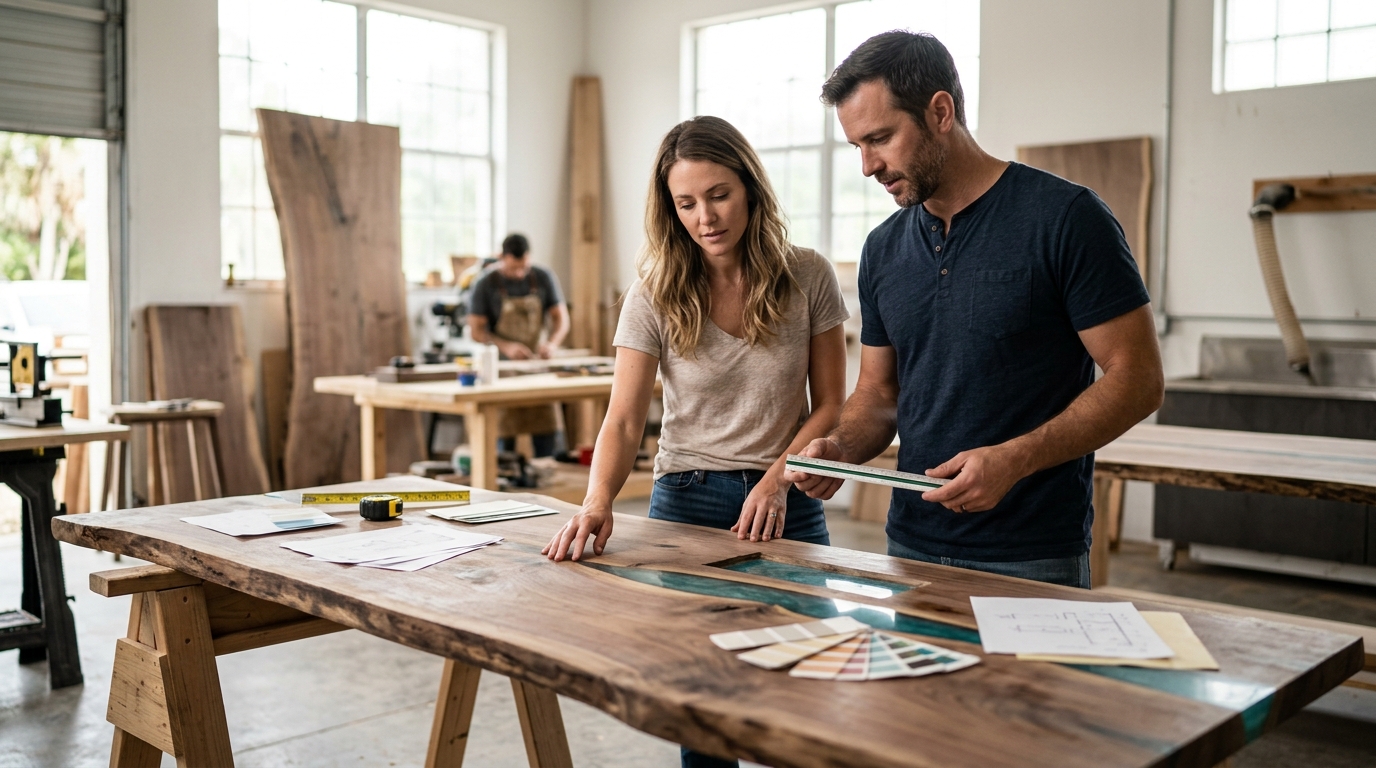
7 Confusing Aspects of Ordering Custom Live Edge Wood Furniture
Ordering a one-of-a-kind slab table often feels like navigating a maze of technical jargon and hidden variables. The gap between a rough sketch and a finished piece is filled with decisions that can easily overwhelm first-time buyers. Live Edge Tables Co. helps clients cut through the noise by focusing on the specific details that actually affect the final build. This guide breaks down the most common points of confusion so you can order with confidence.
1. The Difference Between Live Edge and River Tables
Live edge keeps the natural bark line, while river tables join two slabs with resin. Many buyers assume these terms are interchangeable, but they describe fundamentally different construction methods. A live edge table features a single slab with its original, organic contour preserved on one or both sides. A river table, by contrast, splits a slab or joins two pieces and fills the gap with epoxy resin to mimic a flowing water feature.
Understanding this distinction is critical because it changes the structural integrity and aesthetic outcome. If you want the raw, untouched look of a single tree, you need a live edge piece. If you prefer a symmetrical surface with a colorful center, a river table is the correct choice. Live Edge Tables Co. offers both styles, allowing you to select the construction method that matches your design vision.
2. Wood Species and Grain Patterns
Grain pattern is equally important. Some slabs feature straight, uniform lines, while others have dramatic knots, swirls, or cathedral arches. These natural features are permanent and cannot be altered after the slab is selected. Reviewing photos of specific slabs before ordering ensures you are buying the exact piece of wood you want, not just a generic description of a wood type.
3. Resin Color and Viscosity
Resin is not just a filler; it is a design element that requires careful selection. For river tables, the epoxy resin can be clear, tinted, or filled with pigments. Clear resin highlights the wood grain, while colored resins like turquoise or obsidian create a bold contrast. The viscosity of the resin also matters, as it affects how it flows into the gap between slabs. A poorly mixed or low-quality resin can result in bubbles or an uneven surface that detracts from the wood.
Buyers often underestimate the impact of resin on the overall look. A subtle tint can enhance the warmth of the wood, while a bright color can make the table a focal point. It is essential to discuss resin options with the maker to ensure the final product matches your expectations. Live Edge Tables Co. provides guidance on resin choices to help you achieve the desired aesthetic.
4. Base and Leg Styles
Choosing the right base also involves practical considerations. The height of the base must be appropriate for the intended use, whether it is a dining table, coffee table, or desk. The width of the base should be proportional to the slab to ensure stability. A well-designed base complements the slab without overpowering it, creating a balanced and functional piece of furniture.
5. Finish and Maintenance Requirements
The finish protects the wood and determines how you maintain the table. Common finishes include polyurethane, hardwax oil, and lacquer. Polyurethane provides a durable, high-gloss or satin surface that is easy to clean but can be difficult to repair if scratched. Hardwax oil penetrates the wood, offering a natural look and feel that is easier to refinish but requires more frequent maintenance. The choice of finish affects how the table responds to heat, moisture, and daily use.
Understanding the maintenance requirements is crucial for long-term satisfaction. A high-gloss polyurethane finish may require less frequent care but can show scratches more prominently. A hardwax oil finish may need periodic reapplication but allows for easy spot repairs. Live Edge Tables Co. selects finishes that are suitable for the local climate, ensuring the wood remains stable and protected in Florida's humidity.
6. Sizing and Room Proportions
Slab dimensions must fit the room and the intended use. A slab that is too large can overwhelm a small space, while one that is too small may look lost in a large room. Measuring the room accurately is the first step, but it is not the only consideration. You must also account for chair clearance, traffic flow, and the height of the table relative to other furniture. A dining table needs enough space for chairs to be pulled out comfortably, while a coffee table should be proportional to the sofa.
Slabs are unique, and their dimensions are fixed. You cannot resize a slab without compromising its integrity. This means you must choose a slab that fits your space, not the other way around. If you are unsure about sizing, a design and measure visit can help you visualize the table in your room. Live Edge Tables Co. offers design visits to ensure the slab fits your space perfectly.
7. Lead Times and Production Process
Custom furniture is made to order, not from stock. Lead times for custom live edge tables can range from a few weeks to several months, depending on the complexity of the design and the maker's schedule. The production process involves selecting the slab, preparing the wood, pouring resin if applicable, building the base, and applying the finish. Each step requires time and attention to detail. Rushing the process can result in a lower quality product.
Understanding the production timeline helps set realistic expectations. It is important to communicate your desired timeline with the maker and to be flexible if adjustments are needed. A reputable maker will keep you informed throughout the process, providing updates on the progress of your table. Live Edge Tables Co. provides clear lead time estimates and keeps clients updated on the status of their order.
How to Choose Among These Factors
When ordering custom live edge furniture, prioritize the slab and the finish. These two elements define the table's character and longevity. Once you have selected the slab and finish, choose a base that complements the wood and fits your room. Finally, confirm the lead time and maintenance requirements to ensure the table fits your lifestyle. By focusing on these key factors, you can navigate the ordering process with clarity and confidence.
Frequently Asked Questions
What is the main difference between a live edge table and a river table?
A live edge table features a single slab with its natural bark line preserved, while a river table joins two slabs with epoxy resin to create a water-like feature in the center.
How do I choose the right wood species for my table?
Consider the color, grain pattern, and hardness of the wood. Black walnut is dark and stable, while Florida cypress is lighter and more rustic. Choose a species that matches your room's aesthetic and lighting.
What finish is best for a live edge table in a humid climate?
Hardwax oil is often recommended for humid climates because it penetrates the wood and allows it to breathe. Polyurethane provides a more durable surface but can be less forgiving in changing humidity levels.
How long does it take to make a custom live edge table?
Lead times vary based on complexity and the maker's schedule. Simple live edge tables may take a few weeks, while complex river tables with resin can take several months.
Can I customize the base of my live edge table?
Yes, you can choose from various base styles, including steel, wood, and hairpin legs. The base should be proportional to the slab and suitable for the intended use.
What should I do if I am unsure about the size of the slab?
Measure your room accurately and consider the intended use of the table. If you are still unsure, a design and measure visit can help you visualize the table in your space.