
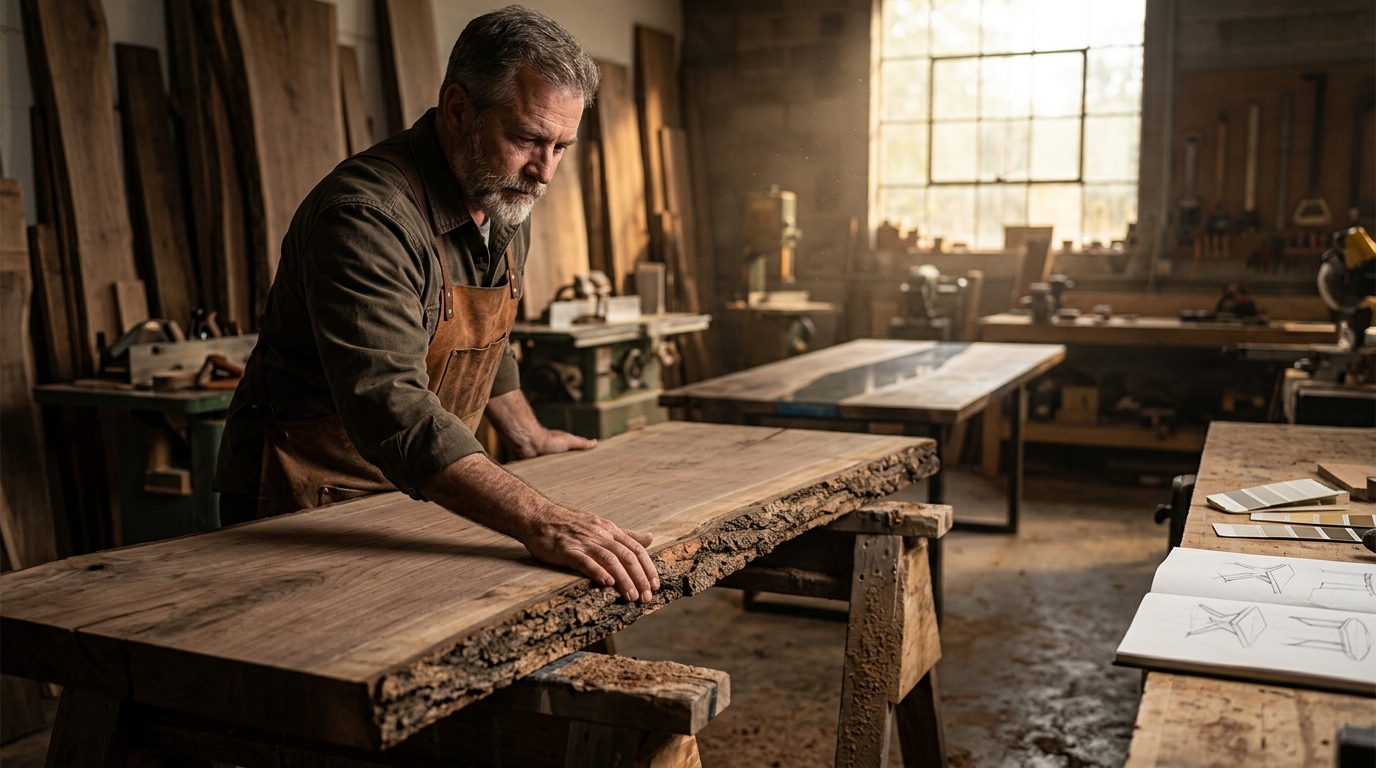
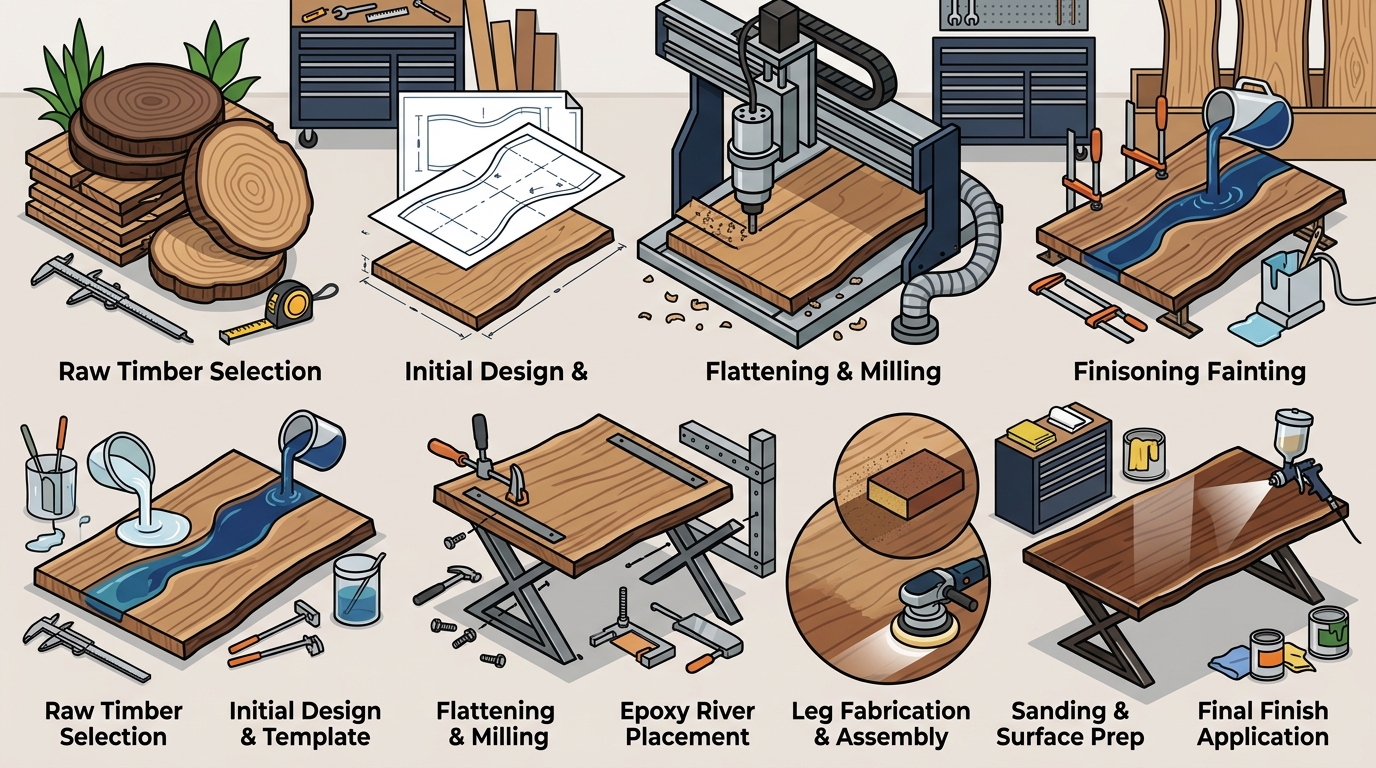
Building a custom live edge table is a precise process that transforms raw timber into a functional piece of art. The journey moves from initial design and material selection through structural fabrication and final finishing. Each phase requires specific skills to ensure the wood remains stable and the final product fits your space perfectly.
1. Design and Measurement
Accurate dimensions determine the final fit and function of the table. The process begins with a detailed consultation to define the table's purpose and dimensions. For pieces that must fit specific architectural elements, a professional visit ensures measurements are precise to the eighth of an inch. This phase establishes the budget, timeline, and aesthetic direction before any wood is cut.
2. Slab Selection and Acclimation
Choosing the right wood and allowing it to stabilize is critical for longevity. The maker selects slabs that match the desired grain, color, and character. Wood moves in response to humidity, so slabs must acclimate to the local environment before being worked. In coastal regions, this step is vital to prevent future warping or cracking in the finished piece. For additional details, review the Meet Steve Sushko Master.
3. Resin Preparation and Pouring
Resin work requires precise mixing and controlled pouring to achieve a glass-like finish. For river or waterfall styles, the maker prepares the epoxy resin and pours it into the gaps between slabs or over the edge. This stage involves managing the chemical reaction to avoid bubbles and ensure the resin cures with the desired clarity and color. For additional details, review the Live Edge Tables amp.
4. Base Fabrication and Assembly
5. Sanding and Surface Preparation
Progressive sanding reveals the wood grain and creates a smooth surface for finishing. The maker sands the wood and resin from coarse to fine grits, paying close attention to the live edges. This labor-intensive phase ensures the transition between wood and resin is seamless and the surface is ready to accept the final finish.
6. Finishing and Curing
The final finish protects the wood and enhances its natural beauty. Options include hardwax oil, tung oil, or lacquer, each offering different levels of durability and sheen. The finish is applied in multiple thin coats, with curing time between each application to build a durable, wipe-clean surface.
7. Delivery and Installation
Safe transport and precise placement complete the build process. The finished table is carefully packaged to protect the finish and edges during transit. Local delivery and installation ensure the table is positioned correctly in the room, with final adjustments made to guarantee stability and alignment.
Choosing the Right Maker
When selecting a builder, look for a maker who handles every stage in-house. This ensures consistency in quality and communication from design to delivery. A single point of contact simplifies the process and guarantees that the person who designs the table is the same person who builds it.
Frequently Asked Questions
How long does it take to build a custom live edge table?
Lead times vary based on complexity and material availability. Simpler pieces may take a few weeks, while intricate river tables with resin can take several months. A professional maker will provide a realistic timeline during the design phase.
What is the difference between live edge and river tables?
Can I choose the wood species for my table?
Yes, most custom makers offer a selection of hardwoods such as black walnut, cypress, or oak. The choice depends on availability, budget, and the desired color and grain pattern. Some species are more stable in humid climates than others.
Is resin safe for food preparation?
Once fully cured, high-quality epoxy resin is generally considered non-toxic and safe for food contact. However, it is not recommended for direct heat or prolonged exposure to hot liquids. Always follow the maker's care instructions for maintenance.
Do you offer delivery outside of Florida?
Many custom makers ship their work across the United States. While local delivery allows for direct installation, shipping requires careful packaging to protect the finish. Check with the maker for their specific shipping policies and costs.
How should I care for my live edge table?
Regular dusting and occasional reapplication of the recommended finish will keep the table looking its best. Avoid harsh chemicals and use coasters for hot items to protect the surface. Proper care ensures the table remains a centerpiece for decades.
Start Your Custom Table Project
Ready to begin the journey from raw slab to finished masterpiece? Design your table with Live Edge Tables Co. and get an instant estimate for your custom piece. Our team in Sarasota, FL, is ready to bring your vision to life with precision and care. according to Using the table1